
PSYCHOLOGICAL SAFETY
Amy Edmondson’s theory of psychological safety is the shared belief within a team that the environment is safe for interpersonal risk-taking, meaning members can speak up, ask questions, admit mistakes, and share half-formed ideas without fear of punishment or humiliation.
Core Definition
- Team-Level Construct: Psychological Safety is an indicator of the team climate rather than an individual personality trait.
- Freedom from Repercussions: People feel confident that no one will embarrass, reject, or punish them for telling the truth, raising a red flag, or exposing an error.
Common Misconceptions
- Not “Being Nice”: It does not mean avoiding conflict or agreeing with everyone. Instead, it invites candour and honest disagreement.
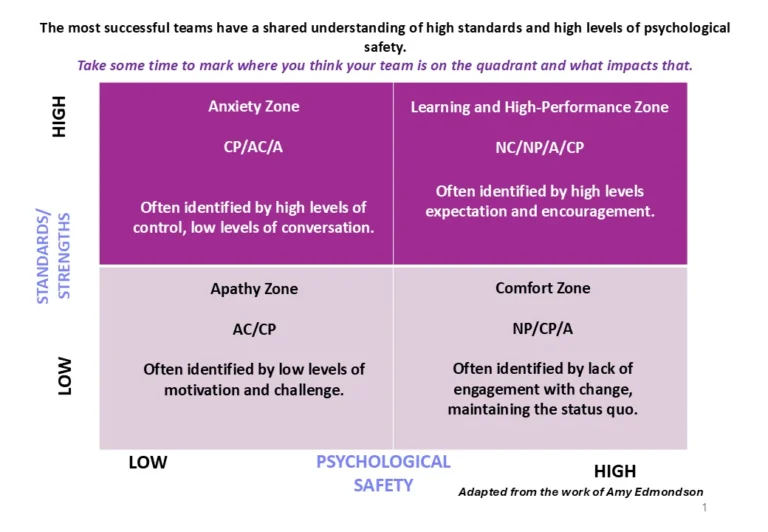
- Not Low Standards: Psychological safety works best when paired with high accountability. Without accountability, a team falls into a lazy “comfort zone”; combined with high standards, it creates a high-performing “learning zone”.
Why It Matters
- Drives Learning and Innovation: Teams with high psychological safety admit mistakes faster, recover from errors quicker, and surface new ideas smoothly.
- Prevents Burnout: A lack of psychological safety causes chronic stress, anxiety, and high employee turnover.
The video below is over 20 minutes long; please set aside enough time. Use page 26 of the workbook to make some notes. We will explore this more on the workshop.
The image below shows how Psychological Safety aligns with Transactional Analysis.
INFLUENCE
As leaders, and as people, we all have the capacity and capability to influence others. We know from our work on TA that we have an impact all the time and that this can be both helpful and unhelpful. This section of the toolbox invites you to think about your Circle of Influence and Concern, your Influencing Style, and your current and desired Map of Influence.
This is ostensibly a ‘White Piece of Paper’ where you visually represent your current network of influence on a sheet of flipchart paper.
This should include information on connections that are important in your world and aspirations to show where you have influence and where you need to have more influence. It might be helpful to think about who is in your circle of influence and who is in your circle of concern.
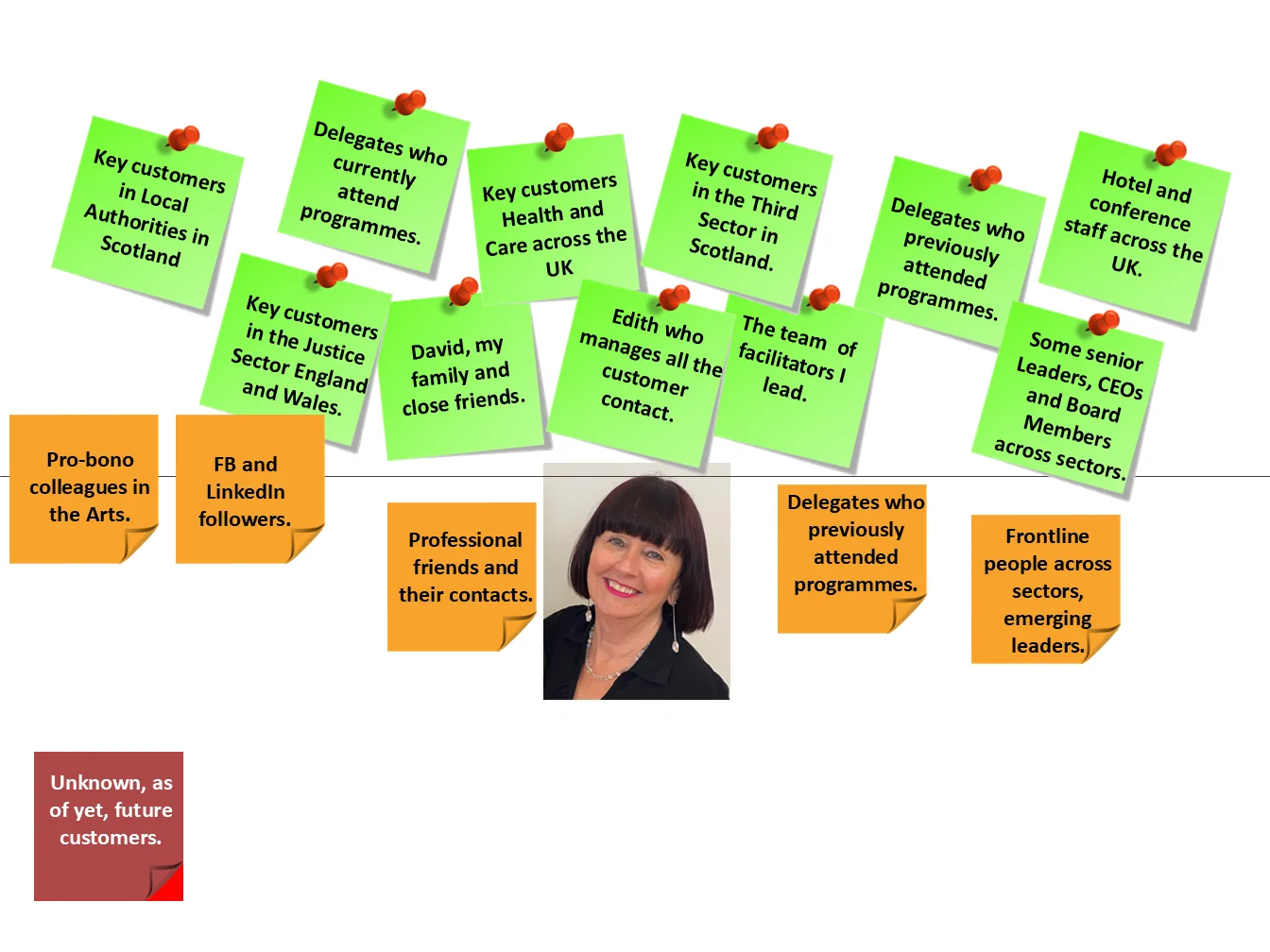
Listen to Fiona speak about her map of influence.
Resource: Influence in the System
CIRCLE OF INFLUENCE
According to Stephen Covey, proactive people focus on issues in the circle of influence, developing positive energy and confidence by making things happen and so gradually enlarging their circle of influence. In contrast, reactive people neglect the issues that are under their control and influence and grow increasingly bitter and frustrated as their circle of influence progressively shrinks.
Discover more about the Circle of Influence by watching the video below.
Sometimes in large organisations, it’s challenging to push out beyond our current circle of influence. This may require us to feel vulnerable, needing to connect to courage and confidence within ourselves. These are not the usual kinds of things that pop up on competency frameworks, especially in the public sector. However, if we as peer leaders need to step out and up from where we are, then it seems that these ideas matter.
Listen to Brené Brown talking about these concepts.